Hot Springs in Eastern Europe: Hidden Gems Beyond Budapest
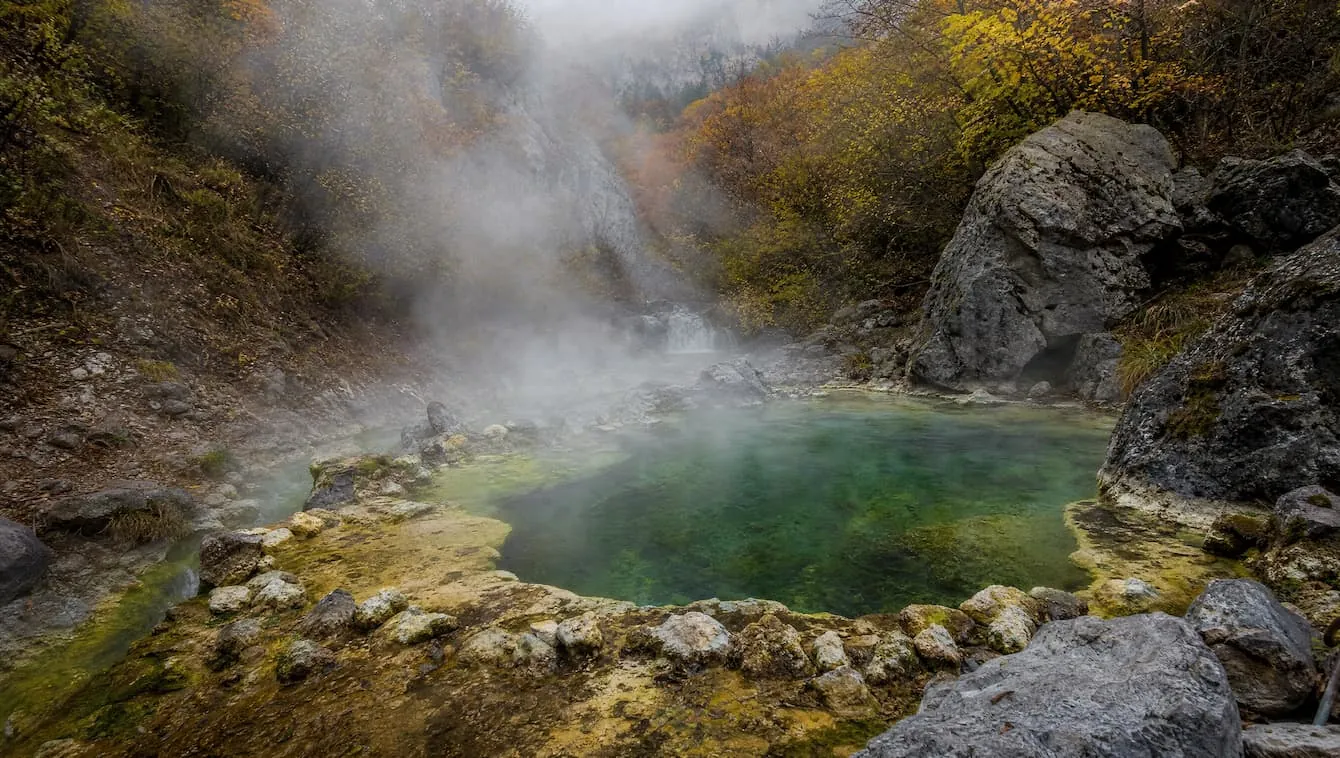
The best hot springs in Eastern Europe are not in Budapest. Beyond the famous Hungarian capital lies a whole world of thermal lakes, cave baths, travertine terraces and Roman spa towns — spread across Romania, Slovakia, Slovenia, Bulgaria and Serbia, often at a fraction of Western European prices. This guide takes you country by country through the region's hidden gems, with prices in EUR, how to plan, and where to stay.
Eastern Europe earns its reputation as a thermal-bathing heartland for three reasons. First, geology: active fault lines and a volcanic past have left the region riddled with mineral springs — Romania alone sits on roughly one-third of Europe's mineral water sources. Second, value: a full day at a major thermal park is usually €15–€30, and spa-hotel nights routinely land under €100. Third, a living spa-town culture with its own local words — "banja" in the Balkans, "băi" or "bai" in Romania, "terme" in Slovenia — where soaking is a social ritual, not a luxury add-on.
Why Eastern Europe? The same fault lines that make the region geologically restless also give it an unmatched density of thermal and mineral springs. Add prices 40–70% below Western spa resorts and a centuries-old soaking culture, and you get the best-value thermal travel on the continent.
Eastern Europe thermal baths at a glance
Short on time? Here's the quick-pick table for the region's headline hot springs, with a typical day-rate in euros and the best airport to fly into.
| Country | Highlight | Why go | From |
|---|---|---|---|
| Romania | Herculane · Sovata · Therme | ~1/3 of Europe's springs; oldest spa; salt lake | €3 |
| Hungary | Hévíz thermal lake | Swim a spring-fed lake that renews every 72h | €11.50 |
| Slovakia | AquaCity Poprad · Piešťany | Tatras backdrop + famous sulphuric mud | €28 |
| Slovenia | Terme Čatež | Family thermal riviera near Croatia | Varies |
| Bulgaria | Velingrad | 80+ springs; cheapest soaks in the Balkans | €2.50 |
| Serbia | Vrnjačka Banja | Uncrowded banja town, promenade culture | Varies |
All prices verified June 2026 and shown in EUR for guidance (local-currency rates can shift with the exchange rate; ~390 HUF and ~1.96 BGN to €1). Always check official sites before you travel.
Romania: the thermal heart of Eastern Europe
If you only pick one country for hot springs in Eastern Europe, make it Romania. It sits on roughly one-third of the continent's mineral water sources — an extraordinary density that delivers everything from Europe's oldest documented spa to a Dead-Sea-like salt lake and the largest urban thermal complex on the continent. Crucially, it's also where this very map lives, so you can plan a Romanian leg in far more detail than anywhere else below.
For the full picture, see our companion guides to the best thermal baths in Romania and hot springs in Romania. Here are the five that should be on every traveller's radar.
Băile Herculane — Europe's oldest documented spa
Caraș-Severin, south-west Romania
Founded by the Romans as "Ad Aquas Herculis Sacras" in 153 AD, Herculane is the oldest documented spa in Europe, set in the dramatic Cerna Valley gorge of Domogled–Cerna Valley National Park. Sixteen springs at 35–62°C deliver sulphurous-bicarbonate-sodium water, surrounded by Habsburg architecture that is slowly being restored. The historic Apollo Baths cost around 15 RON (~€3); hotel thermal complexes run €10–20/day and treatment packages start from about €40/day.
Want the deep dive? Read our full Băile Herculane guide.
Băile Felix — Romania's largest resort
Bihor, 8 km from Oradea
Eight kilometres from Oradea, Felix is the country's biggest spa resort, with around 7,000 beds and oligomineral springs at 40–45°C. It's home to the wild thermal Nymphaea lotus water lily and a string of family-friendly pools. Day tickets run roughly 30–60 RON (~€6–12). With Oradea airport (OMR) just 7 km / 15 minutes away — and Budapest a 3h30 drive — it even works as a day trip from Hungary.
Sovata — the world's largest heliothermal lake
Mureș, central Transylvania
Sovata's Bear Lake is the world's largest heliothermal lake: trapped solar heat warms its salty layers so the water stays warm well into the depths, while a Dead-Sea-like salinity lets you float effortlessly. Entry is around 40 RON (~€8), plus about 35 RON (~€7) for a lounger. The season runs roughly late May to September, with swimming windows of 10:00–13:00 and 15:00–18:00.
Therme Bucharest — Europe's largest urban thermal complex
Balotești, 20 km north of Bucharest
The largest urban thermal complex in Europe, Therme draws water from 3,000 m below ground into 30-plus pools across three zones — Galaxy, The Palm and Elysium — kept at 28–38°C. A full day in Galaxy is around 104 RON (~€21), or about 167 RON (~€34) for all zones. It's open Mon–Fri 10:00–22:00 and weekends 09:00–22:00, with bus 442 from Piața Presei or roughly a €15 taxi from the centre.
Tickets for Therme Bucharest are also available on GetYourGuide if you want a combined transfer-and-entry option.
Geoagiu-Băi (Germisara) — a quiet archaeological spa
Hunedoara, Transylvania
The most atmospheric, least crowded soak on this list. Geoagiu-Băi was the Dacian and Roman bath of Germisara (106–275 AD), where golden votive plaques were once found. Today its 33°C sulphurous-bicarbonate springs feed quiet pools, and a 40 m thermal waterfall adds the drama — earning it an EU EDEN sustainable-destination award. Historically under €5; verify current rates on the official site (cniptgeoagiubai.ro).
Where to stay in Romania's spa towns
Staying on-site lets you soak in the early morning before the day-trippers arrive. These are well-rated, verified options in two of Romania's top thermal towns — Herculane for history, Felix for year-round comfort.
Bacolux Diana, Herculane 3★
8.9guest score · from €67/night
Bacolux Afrodita, Herculane 4★
8.6guest score · from €96/night
Pensiunea JOJO Imperial Resort & Spa 5★
9.2guest score · from €170/night
Indicative weekend rates for 2 adults — check live prices on Booking.com.
Indicative weekend rates for 2 adults — check live prices on Booking.com.
Planning the Romania leg? Our interactive map of thermal baths in Romania shows every resort, waterpark and natural spring across the country, so you can build a route that fits your time.
Hungary (beyond Budapest)
Everyone knows the Széchenyi Baths in Budapest, but Hungary's most characterful thermal experiences sit out in the countryside — a spring-fed lake you can swim across, a travertine 'salt hill', and pools hidden inside a cave.
Best arrival airport: Budapest (BUD)
Hévíz
Europe's largest biological thermal lake
Hévíz is a natural thermal lake covering 47,500 m², so warm and so deep that it completely renews itself roughly every 72 hours. You float in the open water above the spring, with a covered pavilion keeping it usable right through winter. Tickets (verified June 2026): around 4,500 HUF (~€11.50) for 3 hours, 7,500 HUF (~€19) for a full day; ages 6–14 half-price, under 6 free. Hours are 08:30–19:00 in summer, 09:00–17:30 in winter.
Egerszalók (Saliris Resort)
A travertine 'salt hill' like a mini Pamukkale
The star here is a rare white travertine terrace — mineral water cascading down a 'salt hill' that looks like a scaled-down Pamukkale. The Saliris Resort spa attaches 17 medicinal pools to it, with an adults-only policy (no under-14s), making it the grown-up alternative to family aquaparks. Day tickets from around 9,700 HUF (~€25) — verify current rates on salirisresort.hu.
Miskolctapolca Cave Bath
Thermal pools inside a limestone cave
The cave bath lets you drift through warm 29–34°C water inside a natural limestone cave — genuinely unlike anywhere else in the region. Important: the cave section was damaged by fire in September 2024 and, as of June 2026, may still be partly closed; the outdoor strand has continued operating. Verify the current status on barlangfurdo.hu before you build a trip around the cave itself.
Slovakia
Slovakia pairs thermal water with the dramatic backdrop of the High Tatras and a centuries-old medical-spa tradition centred on its famous sulphuric mud.
Best arrival airport: Poprad-Tatry (TAT) or Bratislava (BTS)
AquaCity Poprad
Slovakia's largest thermal & wellness resort
Set against the High Tatras, AquaCity is Slovakia's biggest thermal resort, with 14 pools from 30°C to 38°C and a sprawling sauna world that even includes a -14°C ice cave. The all-day aquapark is €28 if you buy on the e-shop versus €36 at the cash desk, +wellness packages run €38/€46, and family packs start from around €70. Buying online before you arrive is the cheaper option.
Bešeňová Thermal Park
Natural springs in the Liptov region
Bešeňová sits in the green Liptov valley and balances slides and family fun with quieter mineral therapy pools. It pairs naturally with a Tatras hiking trip or a stop at Liptovská Mara lake. Day passes have historically run around €12–€20 — verify current pricing on thermalpark.sk before you go.
Piešťany
Slovakia's famous medical spa town
Piešťany is the grande dame of Slovak spas — sulphurous water up to 70°C and a powerful sulphuric mud (peloid) that has drawn rheumatism patients for generations, all wrapped in elegant Art Deco architecture. Its unique Mud Pool is the signature treatment. Individual medical sessions start from around €30, with full treatment packages from about €100/day. This is a wellness-and-treatment town rather than a splash-around aquapark.
Slovenia
Slovenia's 'terme' culture is polished and family-friendly, with big thermal riviera resorts near the Croatian border and a grand drinking-cure spa town inland.
Best arrival airport: Ljubljana (LJU) or Zagreb (ZAG)
Terme Čatež
Slovenia's largest thermal resort
On the Sava River near the Croatian border, Terme Čatež is Slovenia's biggest thermal resort, fed by 11 springs at 42–63°C. Its huge outdoor Thermal Riviera bursts with slides and lagoons in the warm months, while the indoor complex runs year-round — a genuine all-rounder for families. Packages start from around €142 per person for two nights including Riviera access; verify day-ticket rates on terme-catez.si.
Rogaška Slatina
Traditional drinking-cure spa town
Rogaška Slatina is a classic grand-hotel spa town built around Donat Mg, marketed as the world's most magnesium-rich mineral water, taken as a drinking cure. Beyond the famous fountains, the wellness pools sit at a comfortable 34–38°C and access starts from around €15/day. It's an elegant, slower-paced base, easily combined with Graz across the Austrian border.
Bled area (Terme Bled / Sava Hotels)
Thermal pools amid world-famous scenery
Lake Bled itself isn't thermal, but several resort spas around it offer thermal pools set against one of Europe's most photographed landscapes — the island church and clifftop castle. It's worth a brief mention as a scenic add-on: soak in a warm pool, then row out to the island. Treat it as a wellness-plus-sightseeing combo rather than a dedicated spring.
Bulgaria
Bulgaria is one of Europe's most spring-dense countries, with the Rhodope Mountains hiding a genuine 'spa capital of the Balkans' and some of the cheapest soaks on the continent.
Best arrival airport: Sofia (SOF) or Plovdiv (PDV)
Velingrad
The 'Spa Capital of the Balkans'
Tucked in the western Rhodope Mountains, Velingrad packs in more than 80 springs ranging from a mild 25°C to a scalding 97°C — one of the densest concentrations of thermal water anywhere in the Balkans. Municipal baths cost just BGN 5–10 (~€2.50–5), while hotel thermal pools run €10–25/day. For budget-minded soakers, this is hard to beat.
Sandanski
Bulgaria's mild-climate southern spa
Bulgaria's southernmost spa town enjoys a famously mild Mediterranean-influenced climate and springs at 41–82°C. It's long been associated with respiratory wellness, thanks to the clean air and warm winters. Hotel spas start from around BGN 30 (~€15)/day and stays from about €65/night, with easy reach from Greece via Thessaloniki.
Devin
Rhodope town of famous bottled water
Best known for the bottled mineral water that carries its name, Devin also has a thermal aquapark with six pools from 26°C to 36°C, deep in the Rhodope Mountains. The public aquapark is about BGN 10 (~€5), while the Devin Spa Hotel's thermal zone is around BGN 40 (~€20). It's a relaxed, family-suitable mountain base.
Serbia
Serbia's 'banja' spa towns are wonderfully uncrowded and inexpensive, with promenade culture, fortresses and waterfalls layered on top of the thermal water.
Best arrival airport: Belgrade (BEG) or Niš (INI)
Vrnjačka Banja
The 'Queen of Serbian Spas'
Central Serbia's flagship spa, Vrnjačka Banja has seven springs — including a rare one that emerges at almost exactly body temperature, 36.5°C. The Rimski Izvor spa centre anchors a town built for the leisurely promenade culture that defines the Serbian banja. Hotel packages typically run €40–80/night, making it an easy, affordable weekend from Belgrade.
Sokobanja
Mountain air + radon mineral springs
At 400 m altitude in south-eastern Serbia, Sokobanja combines radon mineral springs with clean mountain air, plus the Sokograd fortress, the Ripaljka waterfall and good hiking. It is one of the cheapest and most uncrowded spa stays in the region, with rooms from around €30–50/night — ideal if you want nature and quiet alongside your soak.
How to plan your Eastern Europe hot springs trip
Best arrival cities
Match your flight to the springs you're after:
- Hungary — fly into Budapest (BUD), then drive out to Hévíz, Egerszalók or Miskolctapolca.
- Romania — Timișoara (TSR) for Herculane; Oradea (OMR) or Cluj (CLJ) for Felix; Târgu Mureș (TGM) for Sovata; Bucharest (OTP) for Therme Bucharest.
- Slovakia — Poprad-Tatry (TAT) is on-site at AquaCity; Bratislava (BTS) for Piešťany.
- Slovenia — Ljubljana (LJU) or Zagreb (ZAG), both close to Terme Čatež.
- Bulgaria — Sofia (SOF) or Plovdiv (PDV) for Velingrad and Devin.
- Serbia — Belgrade (BEG) or Niš (INI) for Vrnjačka Banja and Sokobanja.
When to go
May to September is best for outdoor pools and thermal lakes — Sovata's Bear Lake and Hévíz shine in summer. Winter is magical for indoor and covered baths, when sitting in 36°C water while it snows outside becomes the whole point. Spring and autumn bring the sweet spot of warm water, fewer crowds and lower hotel prices.
Etiquette & practicalities
- Swimwear is required everywhere; nudity is allowed only in designated sauna areas.
- Hungary often requires a swim cap in certain pools — pack one to be safe.
- Towels and lockers are usually rentable for €1–3, but bringing your own saves money.
- A leisure soak needs no medical certificate; only structured treatment courses do.
- Families do best at Therme Bucharest, Felix, Terme Čatež, AquaCity Poprad and Devin; for adults and wellness, head to Piešťany, Rogaška Slatina, Herculane, Vrnjačka Banja or Sandanski.
Start with Romania: see every spring on the map
Romania is the richest single base for a hot springs trip in Eastern Europe — and the easiest to plan in detail. Our interactive map of thermal baths in Romania shows every resort, aquapark and natural spring, so you can see what's near your base and connect the dots into a route.
A note on treatments: the therapeutic uses described here reflect traditional and balneological practice and are not medical advice. Mineral baths, mud treatments and CO₂ therapies have genuine contraindications — especially for heart conditions, high blood pressure and pregnancy. If you're visiting for treatment, get a consultation from your doctor or the resort's on-site medical staff first.
Frequently asked questions
Is Eastern Europe really cheaper than Western Europe for spas?
Yes, noticeably so. Thermal-bath entry and spa-hotel rates across Eastern Europe typically run 40–70% lower than comparable resorts in Austria, Germany or Switzerland. A full day at a major thermal park is often €15–€30, and a night in a four-star spa hotel frequently lands under €100 for two — verify live rates when you book.
Which Eastern European hot springs are most family-friendly?
For slides, shallow pools and all-day fun, head to Therme Bucharest (Romania), Băile Felix (Romania), Terme Čatež (Slovenia), AquaCity Poprad (Slovakia) and Devin (Bulgaria). These combine warm thermal water with aquapark facilities, so children and adults are both happy.
When is the best time to visit thermal baths in Eastern Europe?
May to September is ideal for outdoor pools and thermal lakes like Sovata's Bear Lake or Hévíz, with the warmest air and longest hours. Winter is magical for indoor and covered baths — sitting in 36°C water while snow falls outside is a highlight in Hungary, Slovenia and Romania. Spring and autumn bring fewer crowds and lower prices.
Do I need to book a thermal bath in advance or can I just show up?
For most public baths and thermal parks you simply pay at the gate, though weekends in July and August get busy — go on a weekday morning. Buy spa-hotel stays and treatment courses ahead in peak season. Note that a leisure soak needs no medical certificate; only structured treatment programmes do.
Is Romania really home to a third of Europe's mineral springs?
Yes. Romania sits on roughly one-third of the continent's mineral and thermal water sources, an extraordinary density created by its active fault lines and volcanic past. That is why it has everything from Europe's oldest documented spa (Băile Herculane, 153 AD) to a Dead-Sea-like salt lake at Sovata and the largest urban thermal complex in Europe near Bucharest.
Conclusion: go beyond Budapest
The hot springs in Eastern Europe reward the traveller who looks past the obvious. Hungary's Hévíz lake, Slovakia's Tatras-backed AquaCity, Slovenia's Terme Čatež, Bulgaria's bargain Velingrad and Serbia's quiet banja towns all deserve a place on your list. But for sheer density, history and value, start with Băile Herculane, Sovata and Therme Bucharest in Romania — the thermal heart of the region.
Our tip: pick one country as your anchor, then add a second within a few hours' drive. Use the interactive map to plan your Romanian leg in detail.
Go deeper: related guides
- The best thermal baths in Romania — the headline country, in full detail.
- Hot springs in Romania: map, list & how to visit — natural and developed springs across the country.
- Băile Herculane guide — Europe's oldest documented spa, up close.
We only list properties and destinations from our verified research, and our recommendations are independent.